
Fire Safety Training
Practical fire safety training for UK workplaces, helping employees understand fire hazards, prevention, emergency procedures, evacuation arrangements and the actions expected of them if a fire occurs.
Fire safety training that reflects your workplace
The Fire Safety Order requires employers to provide adequate fire safety training to employees. Training should be linked to the risks and emergency arrangements in the actual premises, not treated as a generic exercise.
New staff should receive training when they start work. Refresher training should be repeated periodically, and additional training is required where staff are exposed to new or increased risks because of changes in role, equipment, technology or working methods.
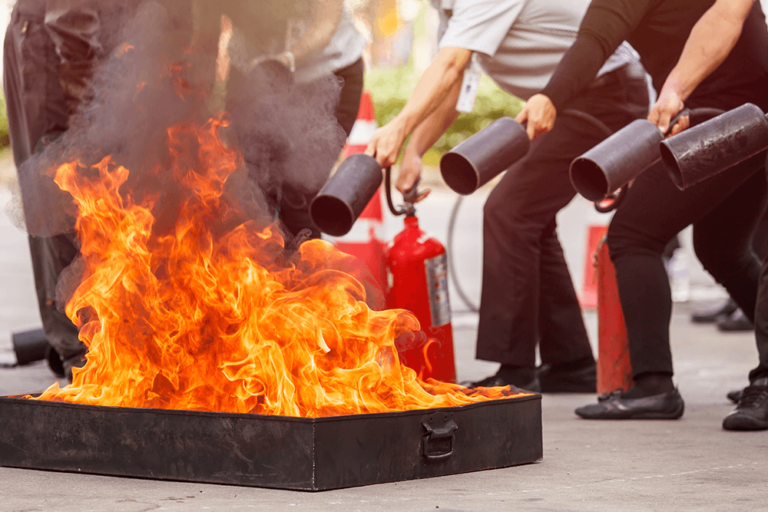
Our sessions use plain language and practical examples. Staff learn how to reduce everyday fire risks and respond to an alarm. We also explain evacuation procedures and each person’s role in the workplace fire-safety plan.
What training can cover
Training can be tailored to the role of staff, the type of premises and the findings of the fire risk assessment.
Fire Safety Awareness
Fire prevention, common hazards, alarm response, escape routes, fire doors and what staff should do when a fire is discovered.
Fire Marshal / Fire Warden Training
Role-specific instruction for staff who have additional fire-safety responsibilities within the workplace.
Site-Specific Refresher Training
Refresh training around your emergency plan, local risks, recent changes and the actions expected from staff.
How often should fire safety training be repeated?
There is no single statutory refresher interval for every workplace. Current government guidance says training should be repeated periodically and notes recognised practice of no less frequently than annually, with more frequent refreshers where risk justifies it.
Higher-risk premises, including care homes and premises where people sleep, may need more frequent training. The appropriate frequency should be considered as part of the fire risk assessment.
Training should also be provided when employees are exposed to new or increased risks, for example after a change in responsibilities, work equipment, technology or systems of work.
Read the official government guidance on fire safety training.
Training should support your fire risk assessment
Your emergency procedures, staff roles and training arrangements should make sense together. A fire risk assessment identifies the people at risk and the measures needed to protect them; training helps make sure staff understand how those measures work in practice.
Who is this suitable for?
- Offices and commercial workplaces
- Care homes and supported living
- Property-management and facilities teams
- Hotels and sleeping accommodation
- Schools and education settings
- Landlords and HMO management teams
Related guidance
Arrange fire safety training for your team
Tell us the type of premises, number of staff and the training support you need. We’ll help you plan a practical session around your workplace.
Workplace Fire Safety Training Guide
Our cornerstone guide covers induction, refresher frequency, fire marshals, drills, records and training for higher-risk premises.
Read the Complete Workplace Fire Safety Training Guide