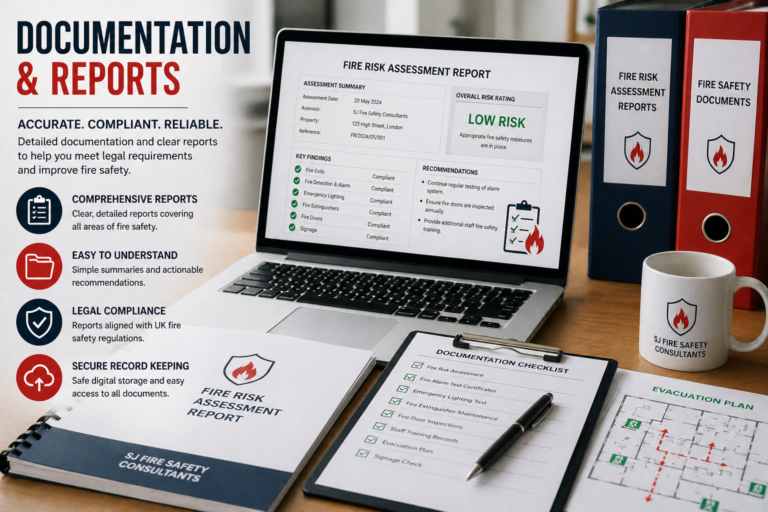
What You Receive

A clear picture of the issues found, the evidence behind them and a practical action plan for what should happen next.

The report should make the next step easier

Illustration of a fire risk assessment report and supporting records on a desk
Illustrative reporting image; not a client report.

From inspection to action

1. Findings — understand what was observed.

2. Priorities — plan which actions need attention first.

3. Records — track progress and retain evidence.

View illustrative report previews

A fire-safety report is most useful when the client can understand it quickly and turn it into action. Our reporting is designed around findings, evidence, priority and practical recommendations.

The exact scope varies by service and premises, but the aim is consistent: give the Responsible Person a usable record rather than a document that simply sits in a folder.
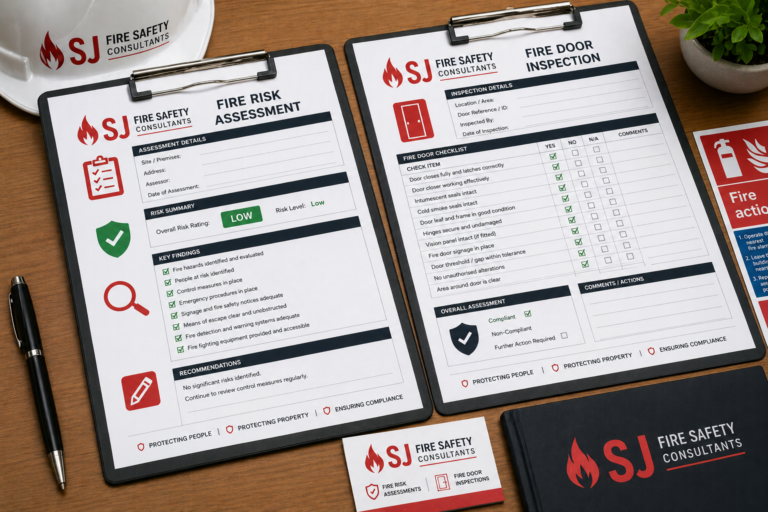
Fire safety inspection paperwork and digital reporting

After a Fire Risk Assessment

Scope & Premises Details

A record of the building, areas assessed and relevant information considered.

Significant Findings

Clear description of hazards, people at risk and existing fire precautions.

Prioritised Action Plan

Recommendations organised so urgent and longer-term actions are easier to manage.

Management Record

A documented basis for review, contractor instructions and ongoing fire-safety management.

After a Fire Door Inspection

Door-by-Door Register

Individual door references and locations help identify exactly which doors require attention.

Condition Findings

Observed defects such as closer, hinge, seal, gap, glazing or damage issues are recorded.

Photographic Evidence

Images support the written finding and make remedial instructions easier to understand.

Remedial Recommendations

Clear next steps help clients plan repair, specialist review or replacement where appropriate.

What happens after the report?

The report is the starting point for action. Clients can use the findings to brief contractors, track completed work, update management records and decide when further review is required.

For portfolios, using consistent references and reporting across sites makes it easier to compare risk, prioritise expenditure and keep evidence organised.

Want to see the report structure before you book?

View our illustrative sample report page to see the type of structure and information clients can expect, including clear findings, supporting evidence, prioritised actions and practical recommendations.